

TL;DR
A big lender has launched a mortgage that lets eligible first-time buyers put down just 1%, and potentially borrow up to six times their income.
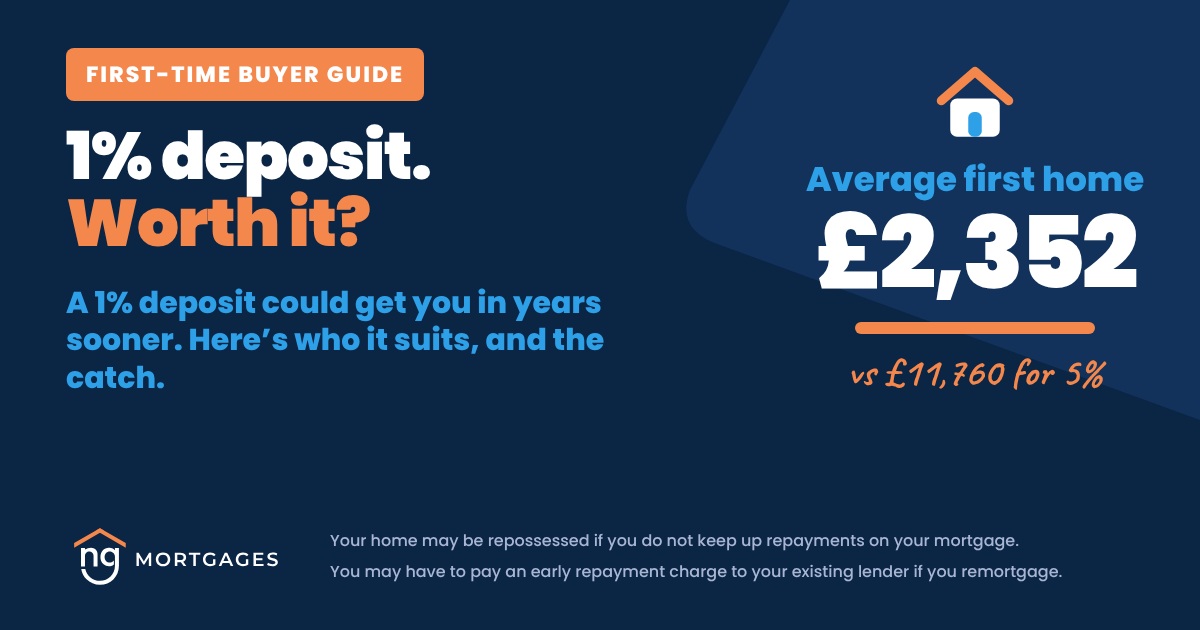
On an average first home, that's a £2,352 deposit instead of £11,760.
The catch: it's a five-year fix only, it's for previously owned houses only (no flats or new builds), and with 99% borrowed there's very little cushion if prices dip.
It could get you in years sooner, but only if the monthly payments work comfortably.
Compare it with saving 5%, and with the Your First Home scheme on a new build.
"Buy your first home with just 1% down."
You'll see that everywhere this week. And for some people, it genuinely could be the thing that gets them out of renting years sooner.
But a 1% deposit means borrowing 99% of the price. That's a big deal, and it's worth understanding properly before you get excited. So here's the honest version: what it is, who it suits, who it doesn't, and how it compares with the other options.
What's just launched
Nationwide has launched a new mortgage called Helping Hand 1% Deposit. Here's what we know:
Deposit: from 1%
Borrowing: eligible first-time buyers could borrow up to six times their income. That's subject to affordability checks, credit scoring and the lender's criteria, so it isn't automatic.
Minimum income: £30,000 for one person, or £50,000 for two buying together
The deal: a five-year fixed rate ONLY - no two-year option currently available
Mortgage term: up to 40 years
Type of home: previously owned houses only. No flats, new builds or listed buildings, and no leaseholds with less than 90 years left.
Not available for: people whose main income is from self-employment, or for Right to Buy, Shared Ownership or other equity schemes
Gifted deposits: allowed, subject to the usual checks
Loan size: up to £750,000
How to get it: only through a mortgage adviser
What a 1% deposit actually means
Nationwide's own example uses an average first home of £235,200:
1% deposit: £2,352
5% deposit: £11,760
They reckon someone saving 5% of their monthly take-home pay could get to 1% in about 15 months, compared with five years and nine months to get to 5%. That's potentially buying around four and a half years sooner.
On the Wirral, terraced houses sold for an average of about £172,000 over the last year. On a £172,000 house:
1% deposit: £1,720
5% deposit: £8,600
For a lot of people renting right now, that's the difference between "one day" and "next year".
The catch
We'd be doing you a disservice if we stopped there.
Almost no cushion. With 99% borrowed, even a small fall in house prices could leave you owing more than your home is worth. That's called negative equity. It doesn't matter while you're living there and paying the mortgage. But it can make moving home or switching to a new deal much harder for a while.
You're locked in for five years. It's a five-year fix only. If your plans change and you need to move or switch early, you'll usually have to pay an early repayment charge.
A longer term costs more overall. Stretching your mortgage over 40 years brings the monthly payments down, but you'll pay more interest in total. It's worth seeing the numbers both ways.
"Up to six times income" isn't a target. Being able to borrow that much on paper doesn't mean it'll feel comfortable every month. Budget for the payments and for the rest of life: bills, food, the car, nights out, the lot.
Previously owned houses only. No flats and no new builds. That rules out a lot of the cheaper first homes, especially if you were looking at an apartment.
Not for the self-employed. If most of your income comes from working for yourself, this one's not for you.
You'll usually pay a higher rate. The less deposit you put in, the higher the rate tends to be. A bigger deposit usually gets you a better deal, so a few more months of saving could pay off over five years.
The deposit isn't the only cost. Solicitors, surveys and moving all cost money on top.
1% vs 5% vs Your First Home
| 1% deposit mortgage | Standard 5% deposit | Your First Home scheme | |
|---|---|---|---|
| Deposit | £2,352 | £11,760 | £5,880, plus a 20% government loan |
| Type of home | Previously owned houses only | Most homes | New builds only, under local price caps |
| Who it's for | First-time buyers earning £30k+ (£50k+ joint), not mainly self-employed | Most buyers | First-time buyers with household income up to £110k (£140k in London) |
| The catch | Very little cushion, five-year fix only | Takes longer to save | The government loan is repaid as a share of your home's value, with interest from year six |
| When | Available now | Available now | Applications expected from February 2027 |
For the full lowdown on Your First Home, read our guide: Your First Home: The 2.5% Deposit Scheme, Minus the Hype.
Who it might suit, and who should probably wait
It might suit you if:
you've got a steady employed income
you're renting and struggling to save a bigger deposit
the monthly payments sit comfortably in your budget
you're planning to stay put for at least five years
It might be worth waiting, or looking at other options, if:
there's a chance you'll move within five years
your budget would be tight
your main income is from self-employment
you want a flat or a new build
What to do right now
Check the basics. You'd need to be a first-time buyer earning over £30,000 (or £50,000 together), buying a previously owned house.
Get your bank statements and credit file in shape. A small deposit doesn't mean lighter checks. Lenders still look at everything.
Work out the monthly payments, not just the deposit. The deposit gets you in, but the payments are what you live with.
Get advice before you offer on anything. You can only get this mortgage through an adviser anyway, so compare it properly with your other options first.
How we help
We'll look at a 1% deposit mortgage alongside everything else open to you, and show you what the monthly numbers really look like.
No pressure. Just honest advice on what's right for you. One person from start to finish, whole of market, in plain English.
This is general information, not personal advice. Everyone's situation is different, so the best next step is a chat about yours.
Thinking about your first home? Book a free chat, call us on 0151 440 3500 or email hello@ngmortgages.co.uk. Let's get it sorted.
Your home may be repossessed if you do not keep up repayments on your mortgage.
You may have to pay an early repayment charge to your existing lender if you remortgage.